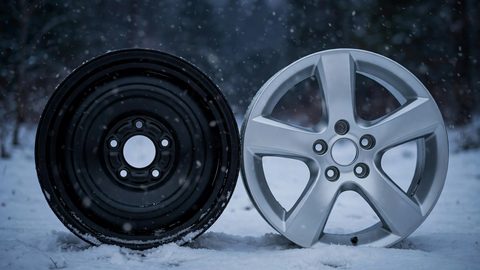

All-weather tires and dedicated winter tires can both be legal, practical options for Ontario driving, but they solve different problems. An all-weather tire is designed to stay on the vehicle year-round while providing certified snow traction. A dedicated winter tire is optimized more aggressively for cold, snow, slush and ice, then swapped out when warm weather returns.
The right choice depends less on the label and more on your actual driving. How early do you leave? Can you stay home during a storm? Do you drive rural roads, hills or long highway distances? Do you value avoiding seasonal changeovers more than maximizing winter performance?
Simple rule: If winter driving is mandatory for your job or family, dedicated winter tires are the conservative choice. If your mileage is lower and your schedule is flexible during severe weather, a good all-weather tire can be a practical compromise.
All-season and all-weather do not mean the same thing
In Canada, “all-season” usually describes a three-season tire intended for spring, summer and fall. It may carry the M+S marking, but it is not necessarily certified to the same snow-traction standard as a tire marked with the three-peak mountain snowflake.
An all-weather tire is built for year-round use and carries the mountain snowflake symbol. That symbol indicates the tire has met a regulated snow-traction performance threshold. It does not mean every marked tire has the same ice grip, cold-weather compound or deep-snow behaviour as every dedicated winter tire.
Where dedicated winter tires are strongest
Dedicated winter tires use compounds and tread designs intended for cold conditions. Transport Canada says all-season and summer compounds begin to lose elasticity below 7°C, while winter tires retain elasticity at much lower temperatures.
- Frequent early-morning or late-night commuting
- Essential travel when snow is falling
- Hilly, rural or less frequently plowed roads
- Long-distance highway driving through variable weather
- Drivers who want the strongest winter-focused setup available
Where all-weather tires make sense
All-weather tires remove the twice-yearly changeover and provide certified snow traction in one set. They can suit lower-mileage city drivers, households with a backup vehicle, remote workers and people who can avoid the worst storms. They can also simplify storage for condo residents.
The compromise is that one design must cover July heat and January cold. No single tire is best at every temperature and on every surface. An all-weather tire may outperform a typical all-season in winter while still giving up some severe-winter capability to a quality dedicated winter tire. Product-to-product testing matters; the category name alone does not rank every tire.
Four questions settle the decision
- Can you postpone a trip? If missing a shift or school pickup is not an option, favour dedicated winters.
- What roads do you use? Regularly plowed urban streets are different from rural concessions, hills and long highway runs.
- When do you drive? Pre-dawn pavement can be colder and icier than an afternoon trip on the same road.
- Will you maintain the tire? Either choice needs pressure checks, rotations and enough tread depth.
Do not forget insurance and tread depth
Ontario insurers must offer a winter-tire discount, but each insurer controls its qualifying rules, date window and required documentation. Some may recognize qualifying all-weather tires; others may apply narrower definitions. Confirm directly before buying based on the discount.
Transport Canada advises against using tires with less than 4 mm of tread in snow. That applies to the real condition of the tire, not just the name printed on the sidewall. Inspect for uneven wear, cracking, bulges and pressure loss throughout the season.
Choose for the worst drive you cannot avoid
Do not choose based only on the average winter day. Think about the worst realistic trip you still have to make. For many essential GTA commuters, four dedicated winter tires remain the safer, more capable answer. For a flexible, lower-mileage urban driver, a high-quality all-weather tire can be a sensible year-round option.
Compare current tire promotions, check manufacturer rebates, and use the mobile tire service page when it is time to install.
Still deciding?
Call 647-819-0490 with your vehicle, annual mileage and normal winter route. Sparky X will recommend the category that fits how you drive - not simply the most expensive option.
Quick FAQ
Are all-weather tires winter tires? They may carry the same mountain snowflake certification, but their year-round design involves different compromises from a dedicated winter tire.
Can I use all-weather tires all year? Yes, when the product is designed and rated for year-round use and remains suitable for the vehicle.