
Every so often a customer checks the sidewall of their brand-new tires, finds the DOT date, does the math, and calls us: "Hey — these tires are four years old. Did you sell me old tires?"
Fair question. The answer is no — you got new tires. But the date on the sidewall needs some context, because a tire's birthday and a tire's condition are two very different things. Here's the honest explanation, including the parts of this business we don't control.
What the DOT date actually is
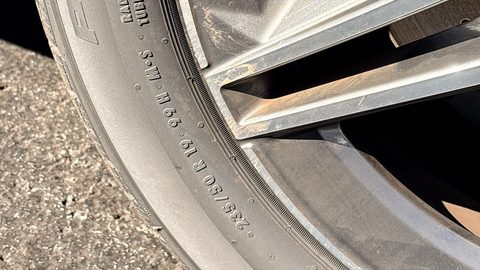
On the sidewall of every tire there's a DOT code. The last four digits are the week and year the tire came out of the mold. "3222" means the tire was manufactured in week 32 of 2022.
That's all it is: a manufacturing date. It is not an expiry date, it is not a "best before," and it is not the date the tire went into service. Tires don't have expiry dates printed on them, because that's not how tire aging works.
If you want the full sidewall tour, read our guide on how to read your tire size and load index — the DOT code lives right in that same cluster of markings.
Why a brand-new tire can have an older date
This is the part most shops won't explain, so we will.
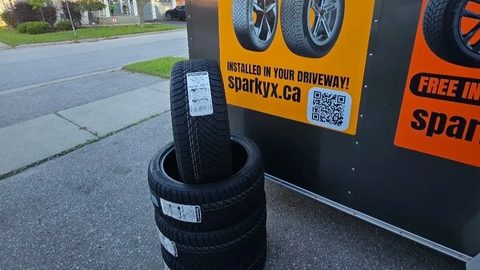
Tire shops — us included — don't manufacture tires, and we don't get to pick birthdays. We order from distributors, and distributors warehouse tens of thousands of tires across every brand, size, and model. When an order goes in, the warehouse ships what's in stock. There is no "send me only this year's production" button, for us or for anyone else in the chain.
Some tires move fast. Common sizes in popular models turn over constantly, so they usually arrive with recent dates. Other tires sell slower:
- Less common sizes and fitments
- Seasonal models — winter tires are produced in batches ahead of the season and warehoused
- Specialized tires: run-flats, EV fitments, performance and light-truck sizes
A slower-selling model can sit in the distributor's warehouse for a few years before it lands on a car. That's not a defect and it's not a scam. It's inventory math, and it happens at every tire retailer in the country — most just don't talk about it.
Why a stored tire is as good as new
Here's what actually ages a tire: being used. Heat cycles, sun and UV exposure, ozone, load, flexing, road chemicals, curb hits, underinflation — that's the hard life. A tire's real aging clock starts when it's mounted and put to work.
A tire sitting in a specialized tire warehouse has none of that. It's stored indoors, out of the sun, in stable temperatures, unloaded, unmounted, and untouched by the road. Manufacturers design their rubber compounds with protective additives precisely so an unused tire holds its properties in storage.
That's why the tire makers' own guidance treats a properly stored, never-mounted tire as a new tire for years after production — the commonly used benchmark is up to about five years in proper storage. Michelin's famous line is that "tires are not bananas": their own testing showed three-year-old tires performing the same as freshly made ones. A four-year-old DOT tire that spent those years in a proper warehouse is, by the manufacturers' own standards, as good as new.
Warranty and rebates: you lose nothing
Two things customers worry about, so let's be direct:
Warranty. When you buy new tires from an authorized seller, your manufacturer warranty — treadwear and workmanship coverage — runs from your purchase, documented by your invoice. Keep your invoice (we email you one), and your coverage is the same whether the DOT date is four months or four years old. The one time the DOT date becomes the fallback is if you have no proof of purchase at all — another reason to keep the paperwork we send you.
Rebates. Manufacturer rebates are based on what you buy and when you buy it — the eligible model, the promotion window, and your invoice date. A live rebate applies to your set of four the same way regardless of the tire's production date. If a set qualifies on our rebates page during the promo period, it qualifies, period.
When an older DOT date IS a real concern
We're not saying the date never matters. It does — in these cases:
- The tire was stored badly: outdoors, in the sun, or somewhere unknown (this is the real risk with mystery online and used tires)
- Visible cracking, discoloration, deformation, or flat spots
- The tire is pushing past five years in storage, or anywhere near ten years old in total — manufacturers commonly recommend removing tires from service at ten years from manufacture regardless of tread
- The seller won't show you the date or gets evasive when you ask
None of that describes a new tire shipped from a distributor's warehouse. And our own rule is simple: we inspect every tire before it goes on your car, and anything cracked, damaged, or deformed doesn't get mounted. The DOT date we'll happily read with you — it's printed on the sidewall, not hidden in fine print.
The bottom line
A DOT date a few years old on a new, properly stored tire is normal, explainable, and — per the manufacturers themselves — not a performance or safety compromise. You get the same tire, the same warranty, and the same rebates. What you don't get from Sparky X is a story: if your tires arrive with an older date, we'll tell you exactly why, show you the code, and inspect the tires with you.
Got a DOT date you're unsure about — on tires from us or from anyone? Call Sparky X at (647) 819-0490 and we'll walk you through it straight.
Frequently asked questions
Is a 4-year-old DOT tire safe to drive on?
If it was stored properly — indoors, out of sunlight, never mounted — yes. Manufacturer guidance treats unused tires stored correctly as new for up to roughly five years, and real aging starts once the tire is in service.
Does an older DOT date reduce my warranty?
No. Your manufacturer warranty runs from your purchase date with your invoice as proof. Keep the invoice we email you and your coverage is unchanged.
Do manufacturer rebates still apply to older-DOT tires?
Yes. Rebates are based on the model, the promotion dates, and your purchase — not the production date. An eligible set of four qualifies the same way.
Can I request tires with this year's DOT date?
You can ask, and we'll always check what's coming in — but no shop can guarantee a production date, because distributors ship from warehouse stock and nobody in the chain gets to pick birthdays. What we can guarantee is inspection, transparency, and tires we'd put on our own families' cars.