
Every October in the GTA the same question comes up on driveways from Scarborough to Bowmanville: should the winter tires go on steel rims or alloys?
The old answer was simple. Steel for winter, alloys for summer, done.
That answer is incomplete now. Some cars cannot run the steel rim you are picturing at all. Some EVs and larger SUVs need an alloy with the right brake clearance and load rating. And plenty of drivers who bought the cheapest steel set online discover the problem is not the material — it is the fitment.
Here is the honest breakdown, from doing winter changeovers and winter packages across Toronto, North York, Scarborough, Richmond Hill, Markham, Pickering, Ajax, Whitby, Oshawa and Bowmanville.
The short answer
For many smaller cars and sedans where a correct steel fitment exists, steel is still the practical winter pick. It costs less than a comparable alloy set, it tolerates pothole hits better in the way that matters, and you do not have to care if it looks rough by March.
For vehicles where steel does not clear the brakes, does not carry the load, or does not exist in a correct hubcentric fitment, a winter-rated alloy is not a cosmetic upgrade. It is the correct wheel.
In other words: pick the material after you confirm the fitment, not before. If you are shopping complete packages, start with fitment on our tire and wheel packages page and in the shop — searching by tire size as well as by vehicle, because distributor tagging by vehicle alone misses options.
What Toronto winter actually does to both materials
Toronto winter is not just snow. It is road salt, liquid brine sprayed before storms, sand, slush that refreezes overnight, and weeks of wet, salty spray on the 401, the DVP and the Gardiner.
Steel rusts. That is not a scare line, it is what steel does once the painted finish is chipped and bare metal is exposed. You will see surface rust and bubbling paint first around the edges and lug area. On most winter steel wheels that rust is cosmetic for a long time, but it needs attention. A wash to get the salt off, and touch-up when the finish breaks, slows it down. Leave a steel wheel caked in salt all spring in a damp garage and it will look much worse by next fall.
Alloy does not rust the same way, but it is not salt-proof. Alloy wheels are usually aluminium with a painted, machined or clear-coated finish. Salt works on that finish. The clear coat lifts, the surface oxidizes and turns dull or white, and the metal underneath can pit, especially around spokes, lug holes and any curb damage that broke the coating. A modern winter-rated alloy with a tougher painted or powder-coated finish stands up better than a polished summer alloy, which is exactly why you should not assume any alloy is a winter alloy.
Neither material wins on salt by doing nothing. Both last longer if you rinse the salt off when you can, and store the off-season set clean and dry.
Potholes: bend versus crack
This is the difference drivers feel in February.
Steel tends to bend on a hard pothole hit. A bent steel wheel may still hold air and get you home, and a bend is often repairable or, if not, the single wheel is less costly to replace than a comparable alloy.
Alloy tends to crack instead of bending the same way. A crack is a different problem. A cracked wheel is not something to keep driving on and hope for the best, and replacement is the usual outcome.
That does not make alloy fragile in normal use. It means the failure mode is less forgiving. If your commute is full of broken pavement, construction plates and potholes you cannot avoid at night in the rain, that bend-versus-crack difference is a real reason to prefer steel where steel fits correctly.
If your vehicle needs an alloy for clearance or load, do not panic about it. Choose a simpler, stronger winter design with fewer thin spokes, and consider whether a smaller diameter with a taller tire sidewall is approved for your vehicle. More sidewall is more protection between the pothole and the rim.
When steel simply will not fit
This is where a lot of online advice goes wrong for newer vehicles.
Brake clearance comes first. Larger front brakes, performance brakes and many EV brake packages leave very little room inside the wheel. A steel wheel in the size listed for a base trim may not clear the brakes on a higher trim of the same model. Year and model are not enough — trim matters.
Load rating comes next. The wheel has to be rated for the weight of your vehicle. That matters even more on heavier EVs, three-row SUVs and trucks. A wheel that bolts on is not automatically a wheel that is rated to carry the vehicle safely.
Then there is hub fit. A proper hubcentric fit centres the wheel on the hub the way the vehicle was designed to carry it. A wheel that relies only on the lug nuts to centre it, or that needs the wrong hardware, is not a bargain. Lug seat type matters too — the nuts or bolts have to match the wheel.
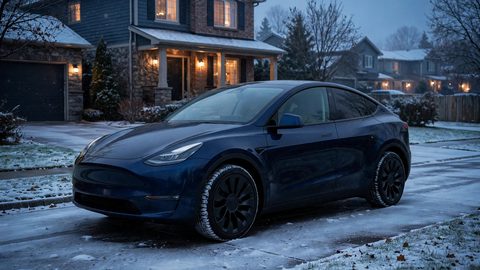
Tesla is the clearest GTA example. A Tesla winter package is not just four winter tires and any rim that is the right diameter. The package needs the correct bolt pattern, hub bore, offset, load rating and TPMS setup. Our Tesla packages include pre-programmed Bluetooth TPMS sensors, so the car reads the winter set properly without a separate programming headache. That detail alone rules out a lot of generic steel-wheel advice written for older gasoline cars.
Bottom line on this section: if a shop or a listing cannot confirm brake clearance, load rating, hub bore, offset and lug seat for your exact trim, do not buy it on price.
Weight, handling and EV range — without the hype
Alloy wheels are generally lighter than steel wheels of the same size. Steel is generally heavier. That is true, and then people exaggerate what it means.
A lighter wheel can feel a little sharper in steering and ride because there is less unsprung weight for the suspension to control. A heavier steel wheel is not dangerous, and any winter range or fuel difference for a typical GTA driver is small compared with the big winter factors: cold air, winter tire rolling resistance, cabin heat on an EV, speed, and tire pressure dropping as temperatures fall.
Do not pick alloy because someone promised a big range gain. Do not avoid steel because someone said the weight will ruin the car. For most drivers, durability, fitment and total package cost matter far more than this one.
Looks and day-to-day care
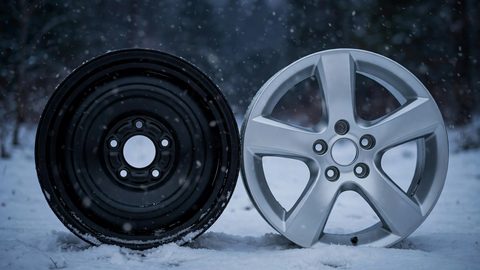
Steel looks like steel. Plain, black, functional, often covered with a hubcap that will probably go missing at some point. Some drivers do not care at all. Some care every time they walk up to the car for five months of the year.
Alloy looks like the rest of the year. If appearance matters to you and you will actually clean the wheels, a winter-rated alloy is a reasonable choice, not vanity. The catch is care. Intricate multi-spoke designs trap salt and slush and take longer to clean. A simple five-spoke winter alloy is easier to rinse, easier to inspect for damage, and easier to live with from November to April.
One more practical point: keep your good summer alloys off the road in winter if you have a dedicated winter set, whichever material you choose. That is half the point of the second set — your summer wheels do not spend the season in salt and pothole season damage.
Downsizing: sometimes smaller is smarter, sometimes it is not allowed
Drivers often ask about going one size smaller for winter — for example, moving to a smaller diameter wheel with a taller sidewall tire that keeps the overall diameter correct. Where the brakes allow it and the load rating is still correct, that can help with pothole protection and ride, and the narrower winter tire options in that size sometimes suit snow use well.
Where the brakes do not allow it, it is not an option, no matter how many forum posts say it worked on a different trim. Never downsize on guesswork. The overall tire diameter, load index and speed rating still have to be right for the vehicle, and the wheel still has to clear everything.
If you are unsure what sizes are legitimate for your car, that is a fitment question to settle before you order, not after the package arrives. Our services page explains how we handle packages and seasonal work, and current offers are on promos and tire rebates.
The checks that matter more than steel versus alloy
Material is the headline. These are the checks that decide whether the package is right:
First, exact fitment for year, make, model and trim — bolt pattern, hub bore, offset and brake clearance.
Second, load. The tire load index and the wheel load rating both have to meet or exceed what your vehicle needs. Do not go below the original equipment specification.
Third, TPMS. Your winter set needs a plan for tire pressure monitoring that works on your vehicle. On many cars that is a set of sensors in the winter wheels. On Tesla packages from us, as noted above, Bluetooth sensors are pre-programmed and included.
Fourth, hardware. Correct lug nuts or bolts for that wheel, correct seat type, and proper torque at install — plus a retorque check after early driving, as your installer directs.
Fifth, the tire itself. A great rim with the wrong winter tire, the wrong size, or a worn-out used tire is still the wrong package. Rim choice does not fix tire choice.
Get those five right, and both steel and alloy can do the job. Get any of them wrong, and neither material saves you.
Which should you buy? By driver
Buy steel if a correct hubcentric steel fitment exists for your exact trim, you want the lowest sensible package cost, your route is pothole-heavy, and you do not care how the car looks in February. This is still the right call for a lot of GTA commuters in smaller cars.
Buy winter-rated alloy if steel does not fit your brakes or load requirement, if your vehicle is a Tesla or another EV that needs that specific fitment and TPMS setup, if you are driving a larger SUV where the correct steel option does not exist, or if looks matter enough that you will maintain the finish. Spend the difference on the correct alloy, not on the fanciest design.
Do not buy either if the seller cannot confirm the fitment in writing for your trim, the load rating is missing, or the price only works by using a tire with too low a load index. Walk away from that package, not toward the cheaper material.
What it costs to have it installed
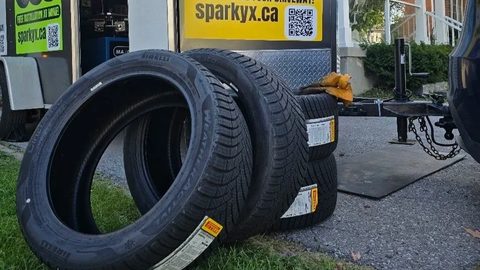
Complete tire and wheel packages from Sparky X include free mobile installation for the first fall-winter season. We come to your home or workplace — the business is fully mobile. Our address at 60 Hoile Drive in Ajax is office only; there is no shop bay to drive to.
If you buy a tire and wheel set separately somewhere else and want us to install it, mobile installation is $160, regular $220. Book online or call (647) 819-0490.
Compared with dealership package pricing, drivers often estimate saving $500 to $1,200. That range is an estimate only, never a promise — your actual difference depends on the vehicle, the tire and the wheel you choose. Get the exact package price first, then compare it like for like.
Frequently Asked Questions
Are steel rims better than alloy rims for winter in Toronto? Neither is better for every car. Steel is less expensive, bends rather than cracks on many pothole hits, and is the practical pick where a correct fitment exists. Winter-rated alloy is the right pick where steel does not clear the brakes, does not meet the load rating, or does not exist in the correct fitment — which is common on many EVs and larger SUVs.
Will alloy rims be ruined by road salt in one winter? A winter-rated painted alloy should not be ruined in one winter if it is rinsed and stored clean. Salt damages the finish over time by lifting clear coat and causing oxidation and pitting, especially through existing curb damage. Polished and machined summer alloys suffer faster in salt than a proper winter finish, which is why material and finish both matter.
Can I put steel rims on a Tesla for winter? Do not assume so. A Tesla winter package needs confirmed brake clearance, bolt pattern, hub bore, offset, load rating and Bluetooth TPMS compatibility for the exact model and trim. Many Tesla packages are built on alloy wheels for those reasons. Our Tesla packages include pre-programmed Bluetooth TPMS sensors — confirm the full fitment for your car before ordering any package, steel or alloy.
Can I downsize my winter rims one size? Sometimes, if the smaller wheel clears your brakes, the wheel and tire load ratings still meet specification, and the overall tire diameter stays correct. It is not allowed on every trim, and it should never be guessed from another trim or model year. Verify the size for your exact vehicle before you buy.
Book your winter package or changeover
Do not wait for the first snowfall lineup to decide this. Confirm the fitment now, pick the material that is actually correct for your trim, and get the date booked.
Book online: sparkyx.ca/book
Call or text: (647) 819-0490
Sparky X Mobile Tire Shop — fully mobile across the GTA and Durham. We come to you.